
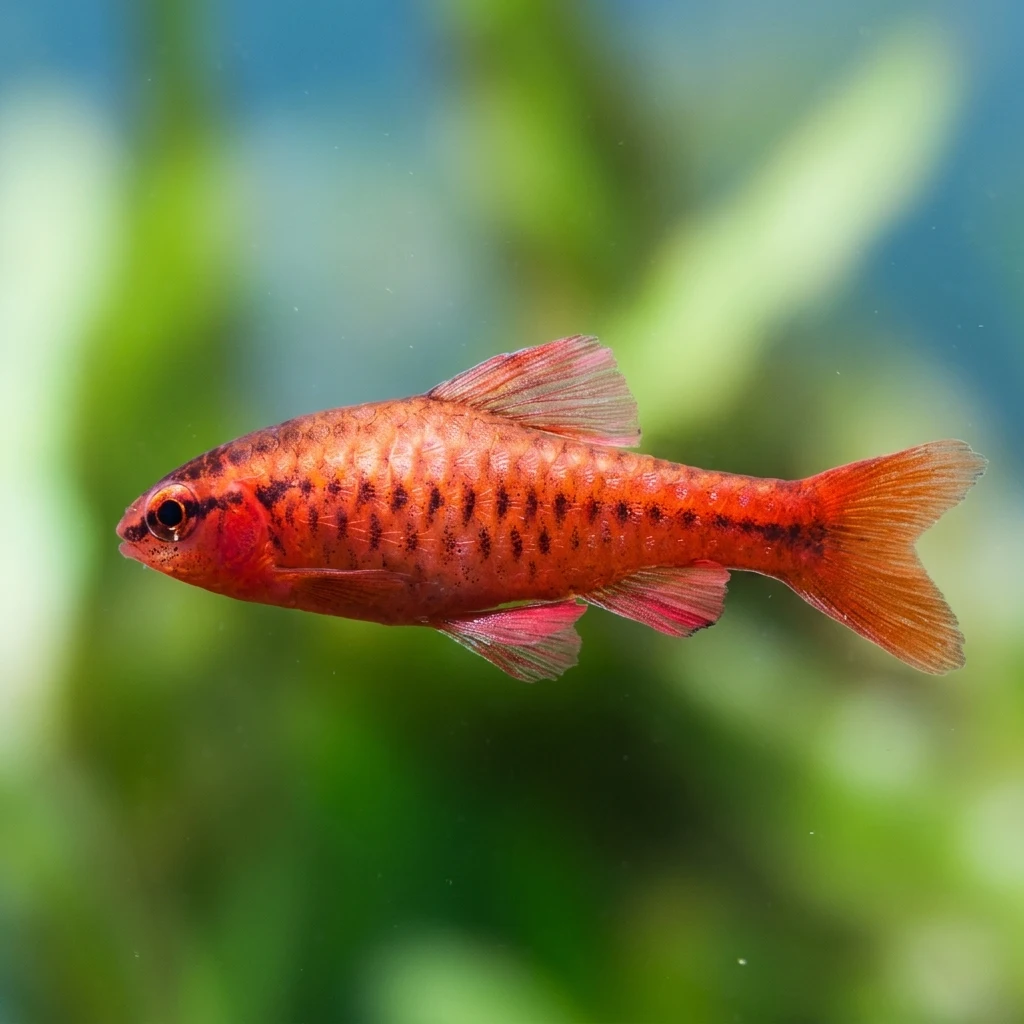
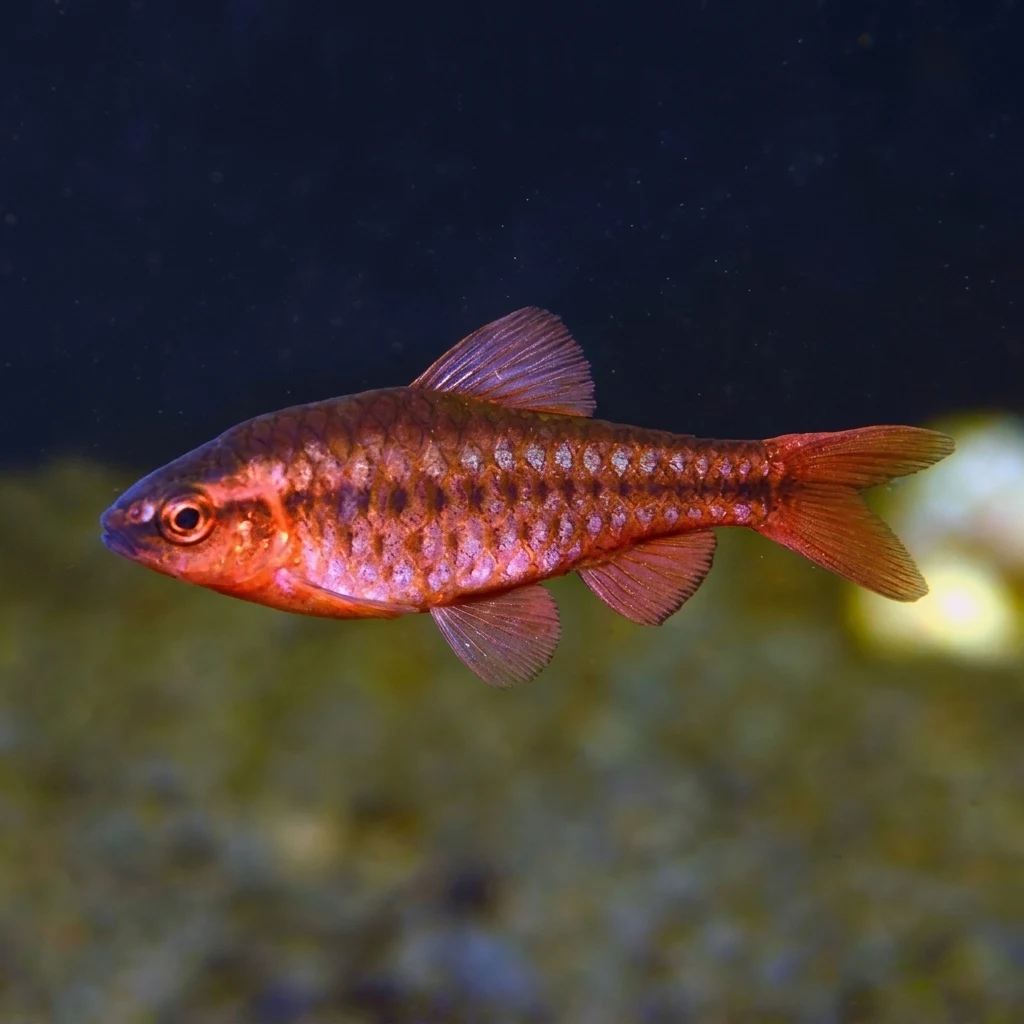
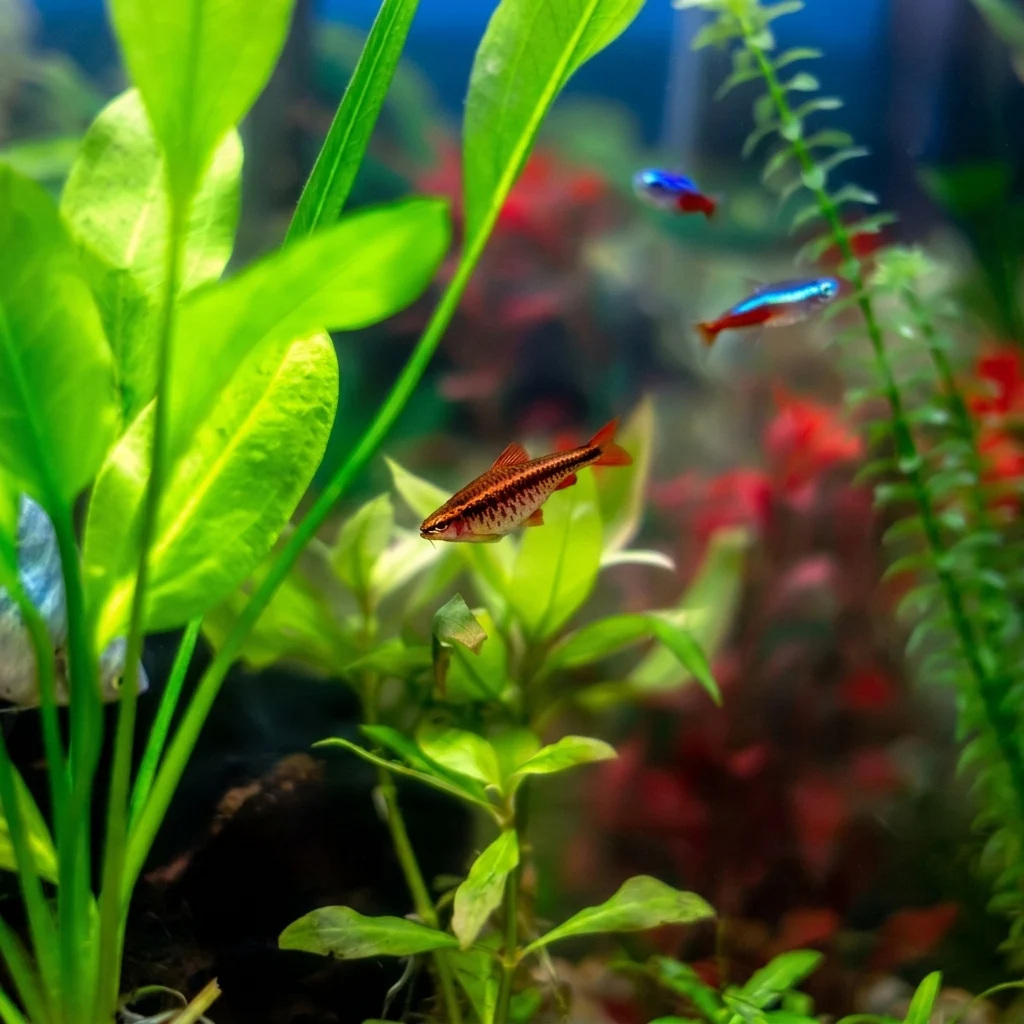
The Cherry Barb (Puntius titteya) is a stunning and peaceful freshwater fish native to the Kelani and Nilwala river basins in Sri Lanka. Renowned for the brilliant cherry-red coloration that males develop during spawning, this active yet gentle shoaling fish is a magnificent addition to planted community aquariums.
Key Characteristics & Appearance
-
Brilliant Spawning Coloration: Males develop a striking, translucent cherry-red to deep crimson body when mature or ready to breed, accented by a dark horizontal stripe along their flanks.
-
Subtle Females: Females are generally a softer, earthy brownish-gold or olive color with a less pronounced lateral stripe, providing a natural contrast in mixed groups.
-
Streamlined Body: Features a slender, torpedo-shaped body typical of barb species, with delicate, reddish-tinted fins.
-
Compact Size: Grows to a manageable adult length of about 1.5 to 2 inches (4 to 5 cm).
Behavior & Temperament
-
Calm & Non-Aggressive: Unlike some of their larger, more boisterous barb cousins, Cherry Barbs are exceptionally peaceful and rarely fin-nip, making them ideal tankmates for tetras, rasboras, and corydoras.
-
Schooling Instinct: Best kept in groups of 6 or more (ideally with a ratio of more females to males). In a proper shoal, males display their finest colors as they spar playfully to establish dominance.
-
Active Mid-to-Bottom Swimmers: Spend their time exploring the middle and lower layers of the tank, darting gracefully around plants and decor.
Care & Aquarium Setup
-
Minimum Tank Size: 15 to 20 gallons to accommodate a comfortable group and provide ample swimming room.
-
Aquarium Decor:
-
Planted Environments: Thrives best in heavily planted aquariums featuring driftwood, rocks, and subdued lighting that mimics their natural shaded stream habitats.
-
Dark Substrate: Dark sand or gravel helps intensify their rich red hues.
-
Diet & Nutrition
-
Omnivorous Eaters: Highly unfussy and readily accept high-quality micro-pellets, flake foods, and small sinking granules.
-
Color Enhancement: Supplement their daily diet with live, frozen, or freeze-dried foods like daphnia, brine shrimp, and bloodworms to maintain peak health and vibrant coloration.
Reviews
There are no reviews yet.