
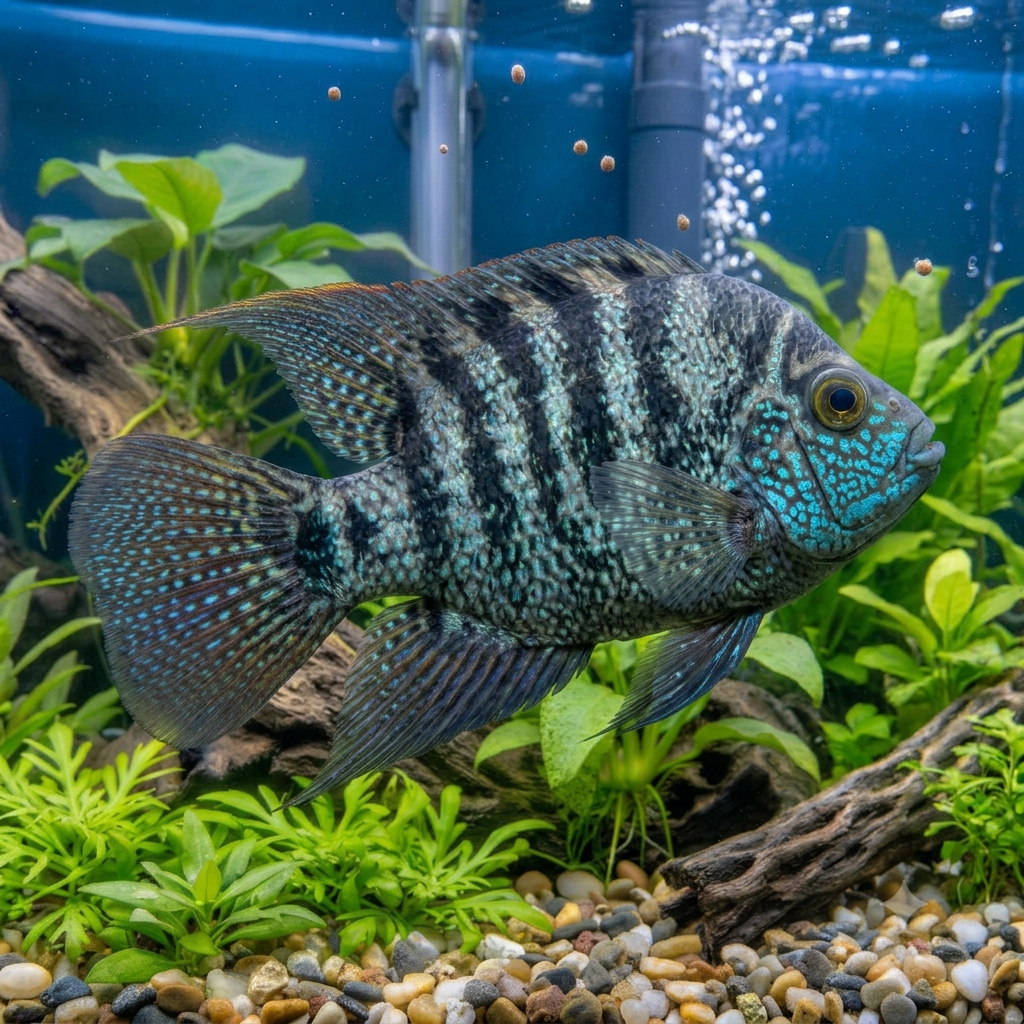
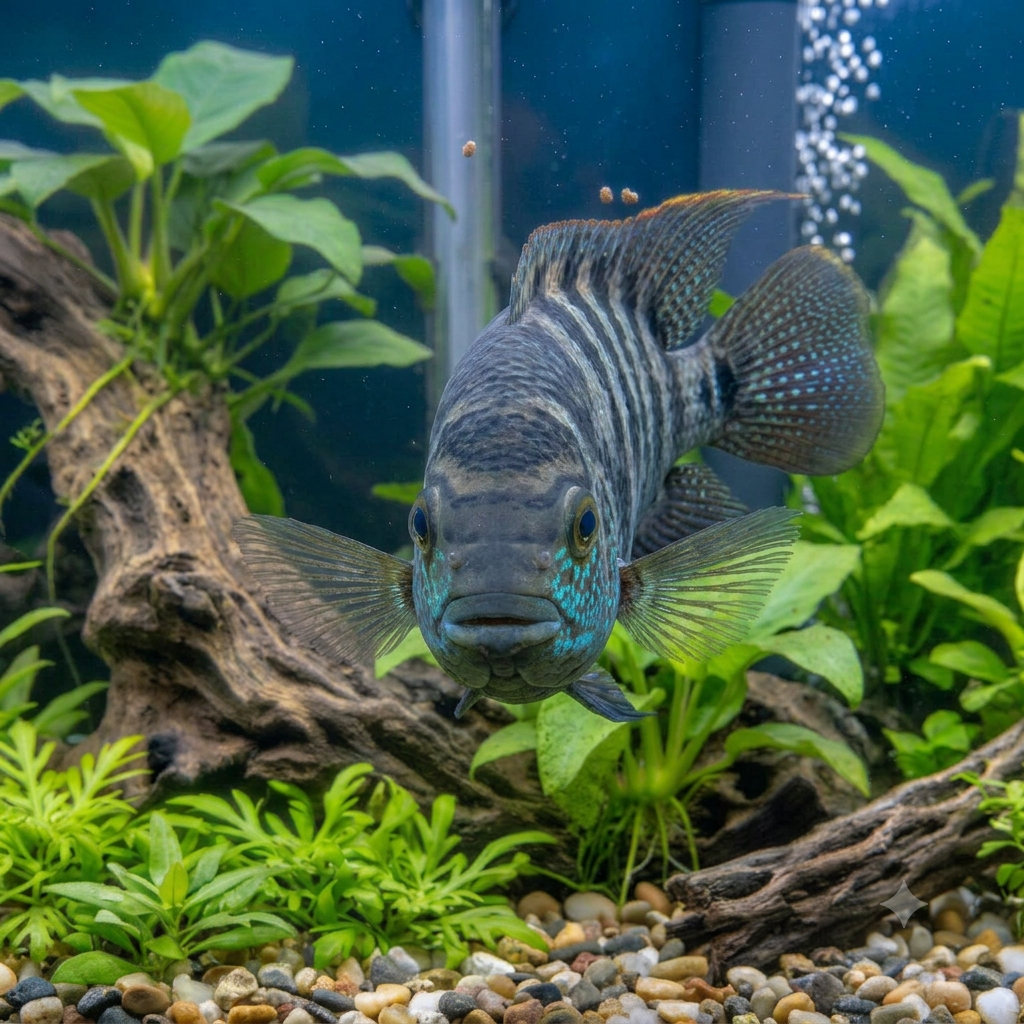
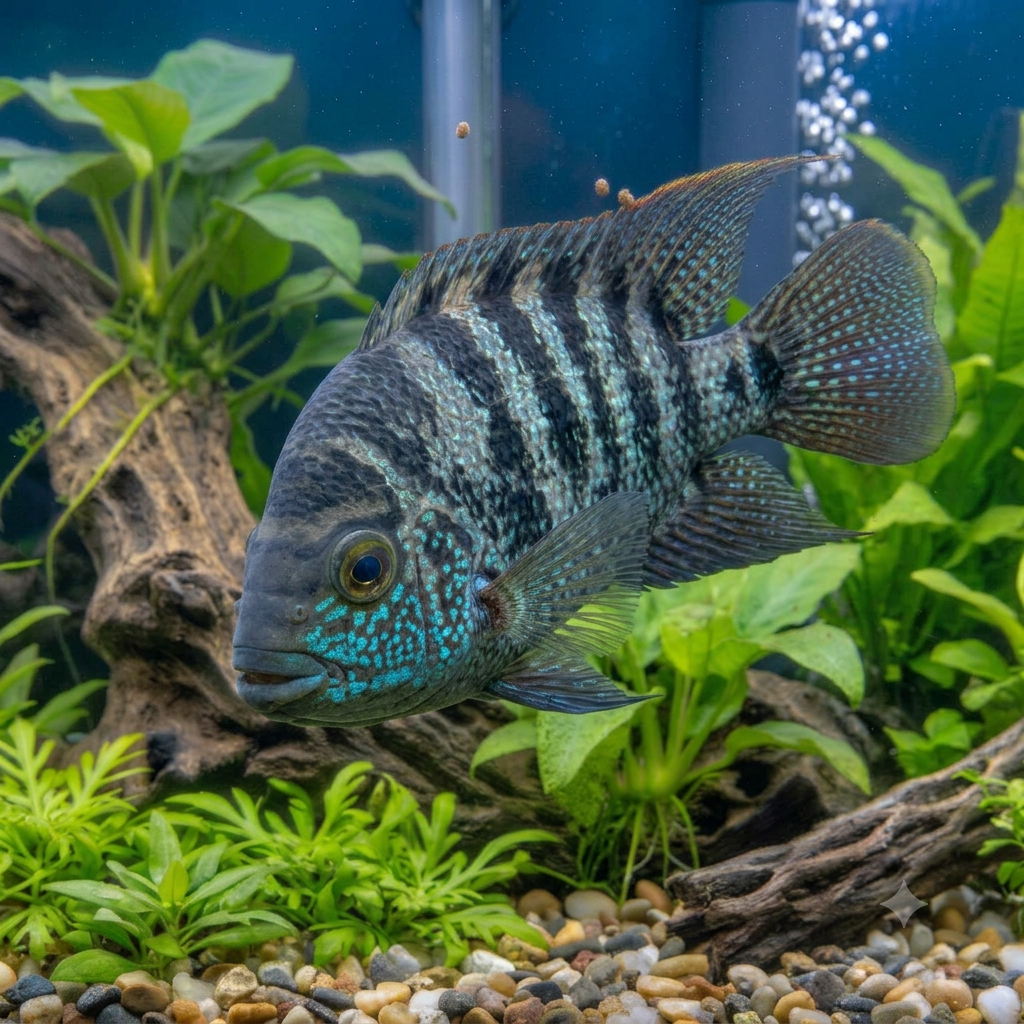
The Zebra Convict Cichlid is a classic, exceptionally hardy freshwater fish favored by aquarists for its striking zebra-striped pattern and fearless personality. Named after the bold, alternating vertical black-and-silver bands running along its body, this Central American cichlid is renowned for its active nature, intelligence, and remarkable breeding behavior. It makes an outstanding centerpiece fish for dedicated cichlid setups.
Key Characteristics & Specifications
-
Coloration: High-contrast pattern of bold vertical black stripes over a pale grey to bluish-silver body. Females display iridescent orange or blue sheen along their lower belly when mature.
-
Distinct Feature: Strong, defined vertical “zebra” banding and pointed dorsal/anal fins in mature specimens.
-
Temperament: Bold, highly territorial, and aggressive—especially when defending breeding sites or territory.
-
Care Level: Easy / Beginner-friendly for cichlid keepers, owing to its extreme hardiness and adaptability.
-
Adult Size: 4 to 6 inches (Males grow larger than females and develop a small nuchal crest over time).
-
Lifespan: 8 to 10 years with standard care.
Water Parameters & Tank Requirements
Diet & Care Notes
-
Diet: Omnivorous and an enthusiastic feeder. Provide high-quality cichlid pellets or flakes as the primary staple. Supplement regularly with frozen or live foods like bloodworms, brine shrimp, and daphnia, as well as spirulina or vegetable flakes.
-
Aquarium Setup: Include plenty of visual breaks, caves, clay pots, smooth rocks, and driftwood to allow them to establish distinct territories. Use a sandy or fine gravel substrate, as Convicts love to dig and excavate nesting spots. Secure or use hardy aquatic plants like Anubias or Java Fern tied to decor, as soft planted roots may be dug up.
-
Compatibility: Best housed alone, as a single pair, or alongside other semi-aggressive Central/South American cichlids of similar size (such as Jack Dempseys or Firemouths) and fast-moving, robust dither fish in large tanks. Avoid housing with passive, slow-moving, or smaller community species.
Reviews
There are no reviews yet.