
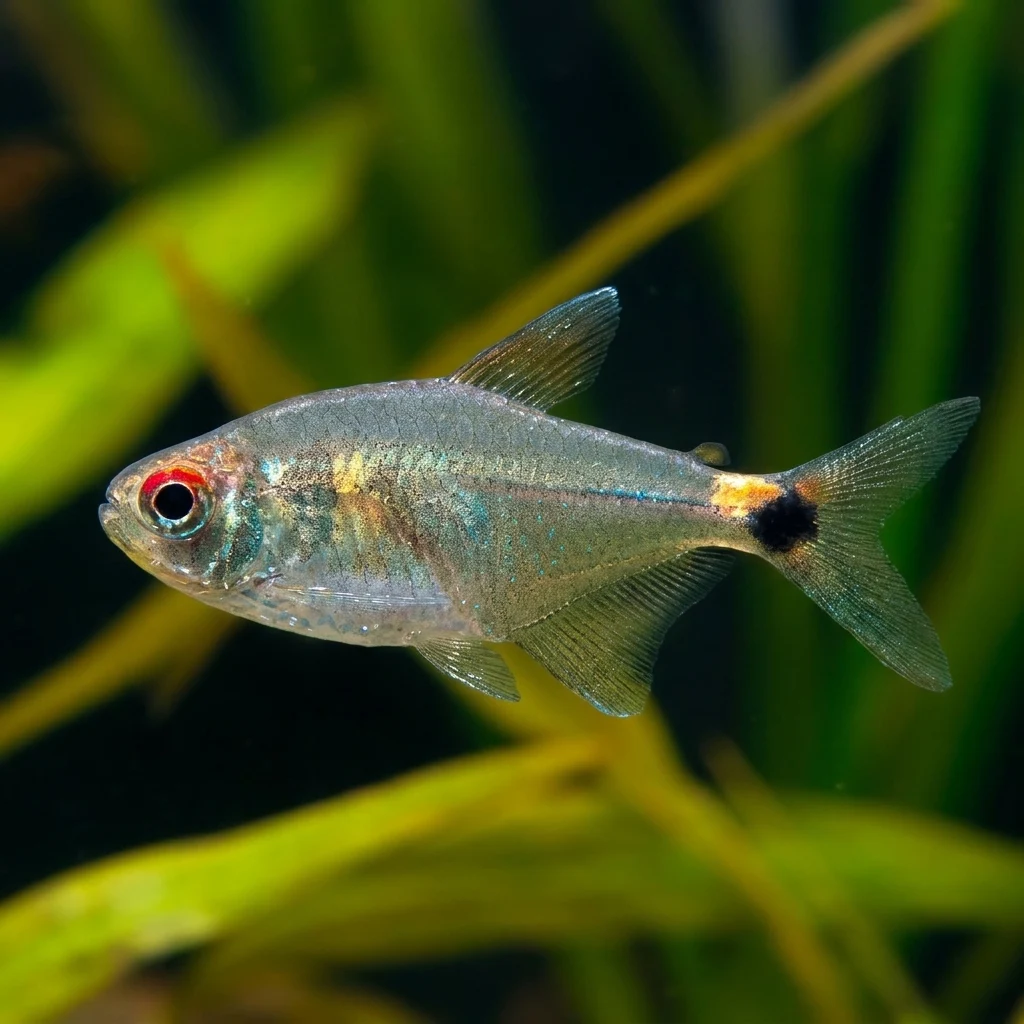
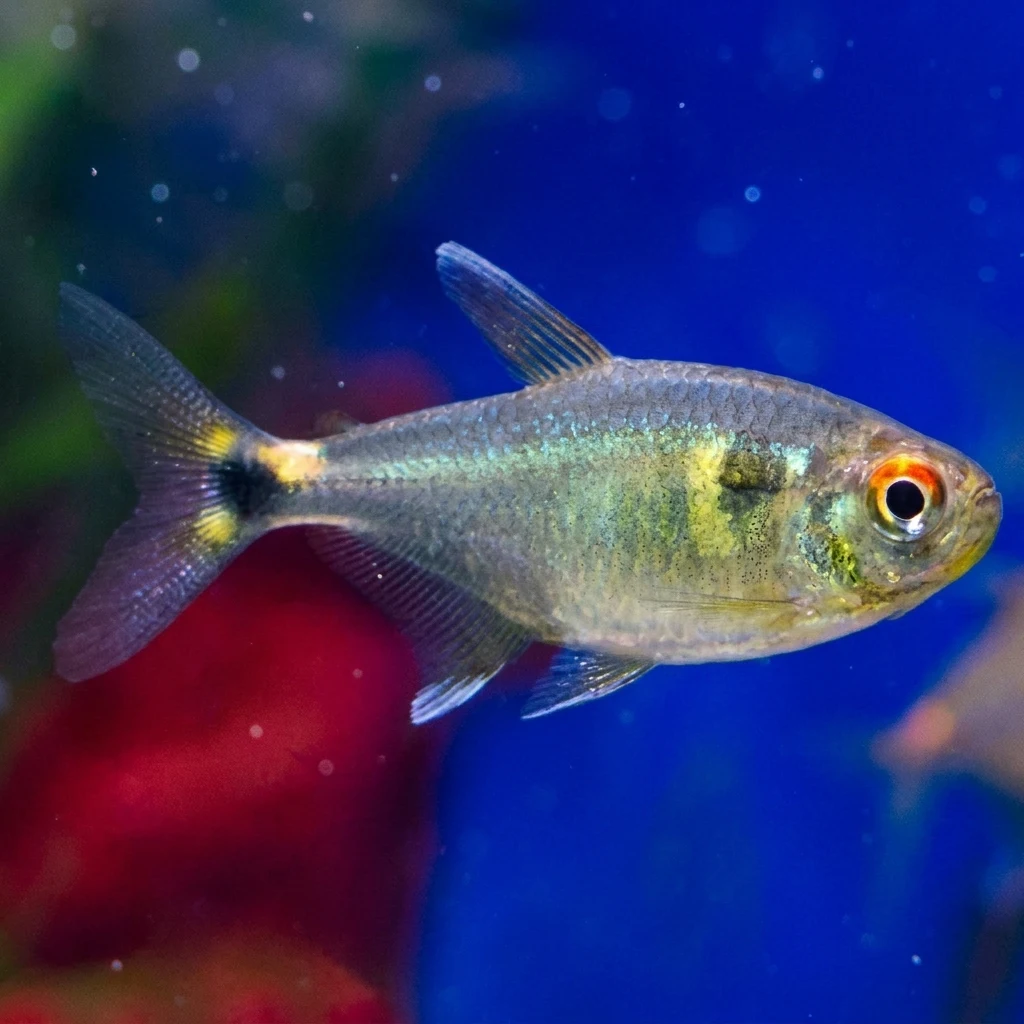
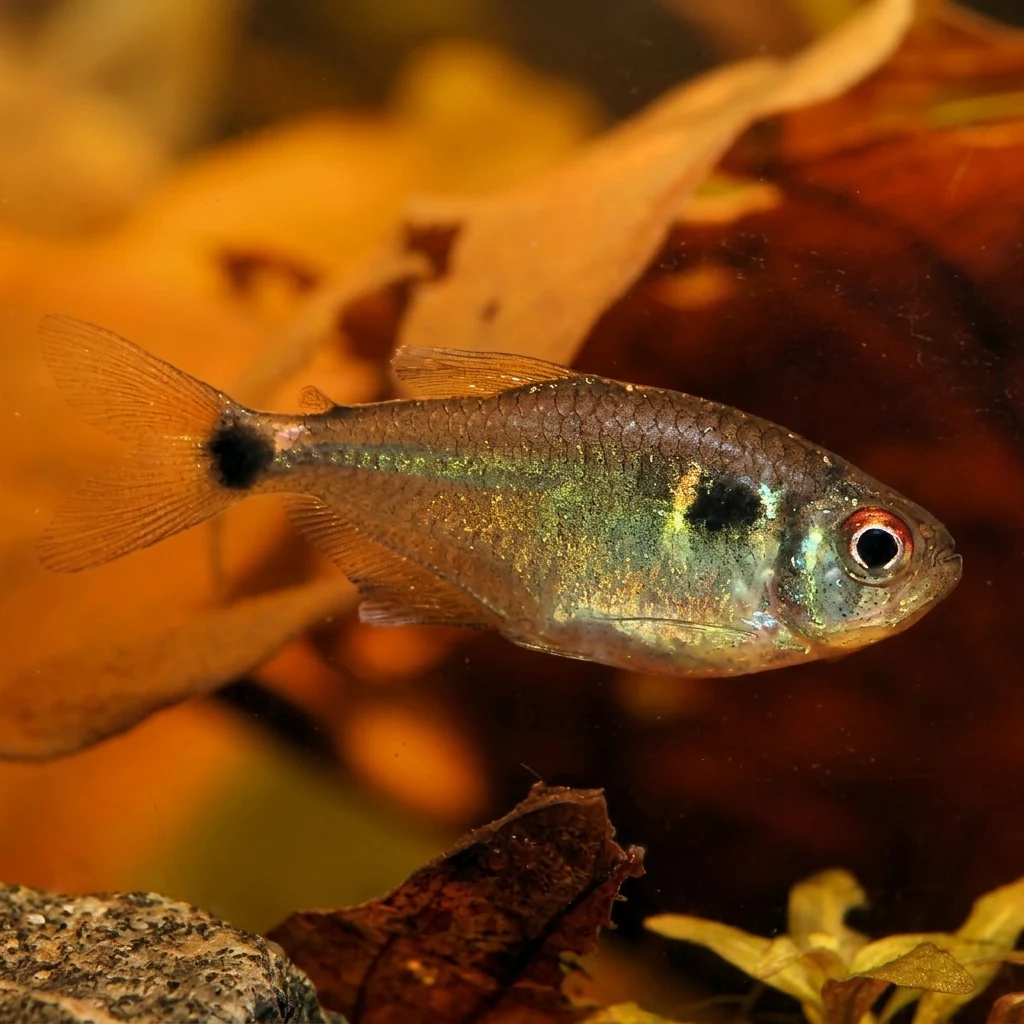
The Head and Tail Light Tetra (Hemigrammus ocellifer) is a classic, hardy freshwater species native to slow-moving rivers and streams across the Amazon and Orinoco basins. Named for the distinct, glowing metallic spots near its eye and tail base, this small characin is a long-standing favorite for community aquariums, offering subtle elegance and active schooling behavior.
Key Characteristics & Appearance
-
Luminous Accents: Features two glowing, copper-gold to intense orange spots—one directly above the eye (“head light”) and another at the base of the caudal peduncle (“tail light”).
-
Translucent Body: Possesses a semi-translucent, silver-gray body with a subtle iridescent sheen under proper aquarium lighting.
-
Distinct Markings: Exhibits a small black spot overlaying the tail light and another faint humeral spot behind the gill cover, adding contrast to its delicate frame.
-
Compact Size: Typically grows to an adult length of 1.5 to 2 inches (4 to 5 cm).
Behavior & Temperament
-
Peaceful & Social: Completely non-aggressive and well-suited for peaceful community aquariums with non-predatory tankmates.
-
Schooling Preference: Best kept in groups of 6 or more (ideally 8 to 10). In larger numbers, they form tight shoals, showcase brighter reflective colors, and display natural group dynamics.
-
Active Swimmers: Occupies mid-to-lower water levels, bringing lively movement to the aquarium without harassing other inhabitants.
Care & Aquarium Setup
-
Minimum Tank Size: 15 to 20 gallons to provide adequate horizontal swimming space for a school.
-
Substrate & Aquascaping:
-
Dark Substrate: Dark gravel or sand enhances the contrast of their reflective spots.
-
Planting & Cover: Prefers a well-planted aquarium with dense background vegetation, floating plants for muted lighting, and open swimming space in the center.
-
Diet & Nutrition
-
Omnivorous Diet: Accepts high-quality micro-pellets, fine flakes, and small sinking granules.
-
Nutritional Variety: Thrives when fed live or frozen treats such as daphnia, baby brine shrimp, and cyclops, which help maintain their health and color intensity.
Reviews
There are no reviews yet.